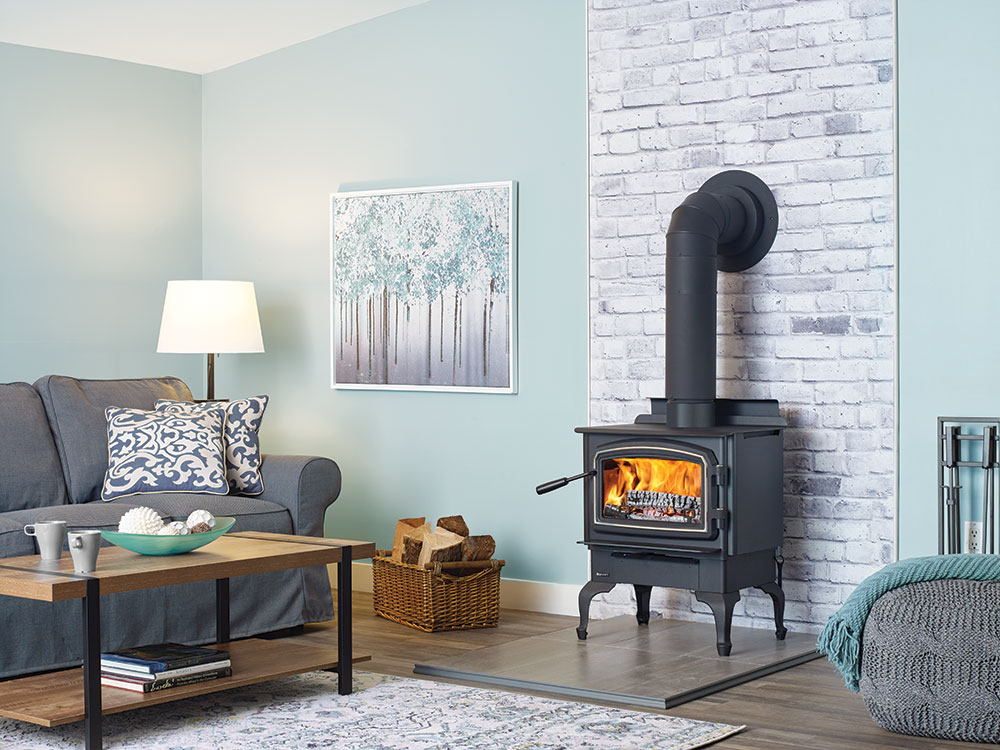

You love the idea of heating your home with a wood-burning stove. There’s just one problem:
Your house doesn’t have a chimney.
Does that mean a wood stove isn’t an option?
Not necessarily.
Many homeowners are surprised to learn that an existing traditional masonry chimney isn’t always required to install a wood-burning stove. Depending on your home’s construction, layout, and the stove you choose, a properly designed chimney and venting system may be installed specifically for the new appliance.
For homeowners considering wood stove installation in Wichita, KS, this opens up possibilities for homes that were never originally built with a fireplace or chimney.
But adding a wood stove isn’t as simple as buying a stove, cutting a hole in the roof, and connecting some pipe.
The stove, chimney, clearances, hearth protection, location, and venting system all have to work together.
Here’s what you should know before adding a wood-burning stove to your Kansas home.
Quick Answer: Can I Install a Wood Stove Without an Existing Chimney?
Yes. In many homes, a wood-burning stove can be installed even if there isn’t an existing masonry chimney. A properly designed and listed chimney system can be installed to safely vent the stove through the home and above the roof.
Whether this is practical for your home depends on several factors, including:
- Where you want the stove
- Your home’s construction
- Ceiling and roof configuration
- Required clearances
- Chimney routing
- Hearth requirements
- The specific stove manufacturer’s instructions
- Applicable building and fire-safety requirements
That’s why the best first step isn’t purchasing a stove.
It’s having your home evaluated.
A Wood Stove Doesn’t Require a Traditional Brick Chimney
When homeowners hear the word “chimney,” they often picture a large brick structure running up the side of the house.
That’s one type of chimney—but it isn’t the only option.
Modern freestanding wood stoves can often use a listed manufactured chimney system designed specifically for solid-fuel appliances.
Depending on the installation, the system may include stove connector pipe inside the room and an insulated chimney system where required as it passes through the structure and continues above the roof.
This means homeowners without an existing fireplace may still be able to enjoy wood heat without constructing a traditional masonry chimney from the ground up.
How Does a New Wood Stove Chimney Work?
Every installation is different, but the basic goal is the same:
Safely carry smoke and combustion gases from the wood stove to the outdoors.
The system needs to create adequate draft while maintaining appropriate clearances from combustible materials.
A typical installation may involve a combination of components specifically designed for the stove and chimney system.
The exact configuration depends on:
- Stove location
- Manufacturer requirements
- Ceiling height
- Number of floors
- Roof design
- Chimney height
- Nearby walls and combustible materials
This is one reason professional planning is so important.
A chimney system shouldn’t be designed around what’s easiest to install. It should be designed around safe operation and proper performance.
Where Is the Best Place to Put a Wood Stove?
Location can have a major impact on how well a wood stove heats your home.
Ideally, a stove should be positioned where heat can move effectively through the living space while also allowing for a practical chimney route.
Factors to consider include:
Central Location
A centrally located stove may distribute heat more evenly throughout the home.
Open Floor Plan
Wood stoves can be particularly effective in open living areas where warm air can circulate easily.
Chimney Route
A straightforward chimney route can often improve draft and simplify installation.
Clearance Requirements
The stove must maintain required distances from walls, furniture, and other combustible materials unless an approved protection system changes those requirements.
Hearth Protection
The floor beneath and around the stove must meet the requirements for that particular appliance.
A professional installer can help evaluate these factors before you commit to a location.
Can a Wood Stove Chimney Go Through the Wall?
Some installations may route the venting system through an exterior wall before transitioning to an appropriate exterior chimney system.
However, whether that’s appropriate depends on the stove, chimney system, house, and installation requirements.
When possible, chimney design often benefits from a more direct vertical route because chimneys rely on draft to move combustion gases upward.
Every bend and horizontal section can affect how the system performs.
The best route should be determined during the planning stage rather than after the stove has already been purchased.
Can the Chimney Go Straight Through the Roof?
In many installations, a vertical chimney route through the ceiling and roof can be an effective configuration.
A straighter vertical path may provide advantages such as:
- Stronger natural draft
- Fewer changes in direction
- Less complicated venting
- Easier cleaning and maintenance
However, roof structure, ceiling framing, attic space, and other components all need to be considered.
The correct solution depends on the individual home.
What Does a Wood Stove Need Besides a Chimney?
The chimney is only one part of a safe wood stove installation.
A professional installer also needs to consider several other important elements.
Proper Hearth Protection
Wood stoves generate substantial heat.
The flooring beneath and around the stove may require a noncombustible hearth system that meets the stove manufacturer’s specifications.
Depending on the appliance, this could involve materials such as:
- Stone
- Brick
- Tile
- Other approved hearth materials
The required dimensions and thermal protection vary by appliance.
Proper Clearances
A wood stove can’t simply be placed against a wall.
The manufacturer specifies minimum clearances from combustible materials.
These may include:
- Walls
- Wood trim
- Furniture
- Mantels
- Shelving
- Other nearby materials
Proper installation protects surrounding materials from excessive heat.
Correct Chimney Height
A chimney must extend high enough to safely exhaust combustion gases and create appropriate draft.
Roof configuration and nearby structures can influence the required chimney height.
Properly Sized Venting
The chimney and connector components must be appropriate for the stove.
Improperly sized venting can contribute to poor draft, smoke problems, and performance issues.
Should I Buy the Wood Stove First?
It’s tempting.
You see a beautiful wood stove online or at a showroom, imagine it sitting in your living room, and decide that’s the one.
But we recommend having your home evaluated before purchasing the stove.
Why?
Because not every stove is appropriate for every home or location.
An evaluation can help determine:
- What size stove makes sense
- Where it can safely be installed
- What chimney system will be needed
- Whether the proposed chimney route is practical
- What hearth protection is required
- Whether the stove will fit the home’s heating needs
Once you know those things, you can shop for an appliance that actually fits the project.
What Size Wood Stove Do I Need?
Bigger isn’t always better.
The appropriate stove depends on much more than your home’s total square footage.
A professional may consider:
- Square footage
- Ceiling height
- Insulation
- Number of floors
- Home layout
- Window efficiency
- Where the stove will be located
- How you plan to use it
An oversized wood stove may produce too much heat for the space, while an undersized stove may struggle to meet your expectations.
Choosing the correct appliance helps create a better overall experience.
Can a Wood Stove Heat an Entire House?
In some homes, a wood stove can provide a significant amount of heat.
Whether it can effectively heat the entire house depends heavily on the layout.
For example, a stove in the middle of an open ranch-style home may distribute heat very differently from one installed at the far end of a multi-story house.
Wood stoves can be excellent supplemental heat sources during a Kansas winter, but expectations should be based on the individual home rather than a generic heating claim.
Why Wood Stoves Make Sense for Kansas Homes
There’s something especially appealing about wood heat during a Kansas winter.
Our weather can change quickly. One day may be relatively mild, and the next can bring bitter temperatures, snow, ice, and strong winds.
A properly installed wood-burning stove can provide:
- Powerful supplemental heat
- The comfort of a real wood fire
- A beautiful focal point
- Another heating option during cold weather
- Excellent warmth for larger living areas
For homeowners who already have access to firewood, wood-burning appliances can be particularly attractive.
Can I Add a Wood Stove During a Remodel?
Absolutely.
In fact, remodeling can be an excellent time to plan a wood stove installation.
If walls, ceilings, flooring, or other parts of the home are already being renovated, you may have more flexibility when planning:
- Stove placement
- Chimney routing
- Hearth design
- Stone or brick surrounds
- Floor protection
- Room layout
At Flue Bird Chimney, our experience with new construction, remodeling, masonry, fireplaces, and chimney installation allows us to look at the entire project rather than only the appliance.
Can You Build a Stone or Brick Area Around a New Wood Stove?
Yes, and this can completely transform the appearance of the installation.
A freestanding wood stove doesn’t have to look like an appliance that was simply dropped into the corner of a room.
Depending on your home’s design and the requirements of the stove, masonry work can help create a beautiful finished space using materials such as:
- Natural stone
- Manufactured stone
- Brick
- Custom hearth materials
The result can make the wood stove look like an intentional architectural feature of the home.
What If I Already Have an Old Chimney?
If your home has an existing chimney but it isn’t currently connected to a wood stove, it should be professionally evaluated before assuming it can be used.
An inspection can help determine:
- What type of chimney it is
- Its current condition
- Flue dimensions
- Liner condition
- Whether repairs are needed
- Whether it’s appropriate for the appliance you’re considering
An existing chimney may be useful, but that doesn’t automatically make it compatible with a new wood stove.
Do I Need a Chimney Inspection After Installation?
A new wood stove and chimney system should be installed according to the appliance and chimney manufacturer’s requirements and applicable standards.
After that, regular inspection and maintenance become part of owning a wood-burning appliance.
Burning wood creates soot and creosote.
Over time, those deposits can accumulate inside the chimney.
Routine chimney inspections and cleaning when needed help keep the system operating properly and give technicians an opportunity to identify maintenance concerns.
What Kind of Wood Should I Burn?
Once your stove is installed, the wood you burn makes a significant difference.
Properly seasoned firewood generally burns hotter and cleaner than wet or freshly cut wood.
Wet wood can contribute to:
- Excessive smoke
- Poor fires
- Dirty stove glass
- Reduced heat
- Increased creosote accumulation
Good fuel, proper operation, and routine chimney maintenance all work together.
How Much Does It Cost to Add a Wood Stove and Chimney?
There isn’t one useful price that applies to every home.
The total project can vary based on:
- Stove selection
- Chimney height
- Number of floors
- Chimney route
- Roof configuration
- Hearth requirements
- Wall protection
- Masonry work
- Installation complexity
A single-story home with a straightforward installation may be very different from a two-story home requiring a more complex chimney route.
That’s why an on-site evaluation is the best way to determine what’s involved.
Is Adding a Wood Stove Worth It?
For the right homeowner, a wood stove can become one of the most enjoyable features in the house.
It may be especially worth considering if you:
- Love wood-burning heat
- Want supplemental heating
- Don’t currently have a fireplace
- Have access to firewood
- Want to create a new focal point in your living space
- Are already remodeling or building
- Want an alternative way to add warmth during Kansas winters
And the lack of an existing masonry chimney doesn’t necessarily have to stop you.
Start With the Home—Not the Stove
If there’s one piece of advice we’d give homeowners considering a new wood stove, it’s this:
Don’t start by buying the appliance. Start by figuring out what works for your home.
Determine the best location.
Determine the chimney route.
Understand the clearance and hearth requirements.
Then choose an appliance that fits those parameters and your heating goals.
Planning the entire system together can prevent expensive surprises and create a much better finished installation.
Wood Stove and Chimney Installation in Wichita, KS
If you’ve always wanted a wood-burning stove but assumed you couldn’t have one because your home doesn’t have a chimney, talk with Flue Bird Chimney before ruling it out.
Flue Bird Chimney has served Wichita and surrounding Kansas communities since 1994, helping homeowners with wood-burning appliances, fireplaces, chimneys, masonry, and complete installation projects.
Our services include:
- Wood stove installation
- New chimney installation
- Fireplace insert installation
- Chimney inspections
- Chimney liners
- Brick and stone masonry
- Custom hearth areas
- New construction and remodeling
- Chimney repair and rebuilding
- Chimney cleaning and maintenance
We’ll evaluate your home, discuss where you’d like the stove, look at possible chimney routes, and help you understand what would be involved in creating a safe, attractive, functional wood-burning system.
Call Flue Bird Chimney today to schedule your free, no-obligation quote. Even without an existing chimney, the wood-burning stove you’ve been imagining may be more possible than you think.
0 Comments