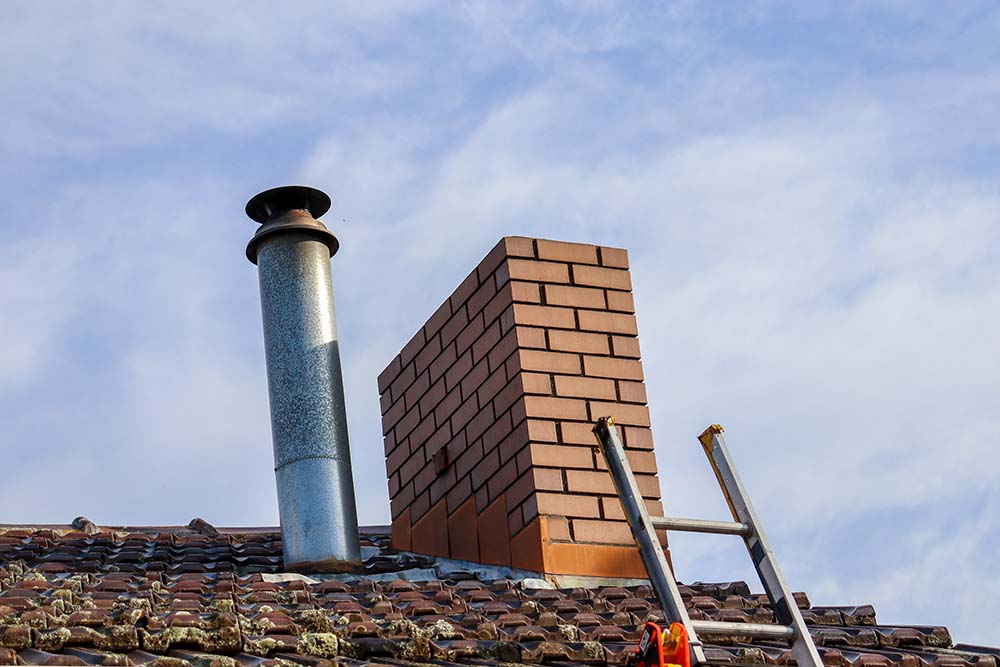

You walk outside, look up at your chimney, and notice something that doesn’t look right.
Maybe a few bricks are cracked. Mortar is beginning to crumble. The chimney looks weathered. Or, more concerning, it appears to be leaning slightly.
That naturally leads to an important—and sometimes stressful—question:
Does my chimney just need to be repaired, or does the entire chimney need to be rebuilt?
The good news is that visible chimney damage doesn’t automatically mean you need a complete rebuild. Many chimney problems can be corrected with targeted masonry repairs when they’re discovered early.
However, there comes a point when continued patching is no longer the safest or most cost-effective solution.
If you’re considering chimney repair in Wichita, KS, here’s how professionals determine whether a chimney can be repaired, partially rebuilt, or needs more extensive reconstruction.
Quick Answer: Repair vs. Chimney Rebuild
A chimney can often be repaired when damage is limited to individual bricks, mortar joints, the chimney crown, flashing, or other isolated areas. A partial or complete chimney rebuild may be necessary when deterioration is widespread, the chimney has become structurally unstable, or large portions of the masonry have failed.
The only reliable way to know is to have the chimney professionally inspected.
That’s especially important because the damage you can see from the ground may only tell part of the story.
Signs Your Chimney May Only Need Repair
Not every crack means it’s time for a new chimney.
When problems are discovered early, professional chimney masonry repair can often restore the damaged areas and prevent deterioration from spreading.
Some common repairable problems include:
- Small mortar cracks
- A limited number of damaged bricks
- Minor chimney crown cracks
- Localized water damage
- Flashing leaks
- Missing or damaged chimney caps
- Early-stage masonry deterioration
Depending on the condition of the chimney, repairs may involve replacing individual bricks, restoring mortar joints, repairing the crown, correcting flashing problems, or waterproofing the masonry.
This is one reason routine inspections are so valuable: small repairs today can help prevent a major chimney rebuild later.
1. Cracked or Crumbling Mortar Joints
Mortar holds the bricks of your chimney together. Over time, exposure to Kansas weather can cause that mortar to crack, crumble, or wash away.
If deterioration is limited, tuckpointing or repointing may be able to restore those joints without rebuilding the chimney.
However, widespread mortar failure can become a structural concern.
Once enough mortar deteriorates, bricks may begin shifting and the chimney can lose stability.
2. Spalling or Damaged Bricks
Have you noticed pieces of brick breaking away from your chimney?
This is known as spalling.
Brick is porous, which means it can absorb moisture. When that moisture freezes, it expands. Repeated freeze-thaw cycles can eventually cause the surface of the brick to crack, flake, or break apart.
A handful of damaged bricks may be replaceable.
But if spalling is occurring throughout large portions of the chimney, more extensive restoration or rebuilding may be necessary.
3. A Cracked Chimney Crown
The chimney crown sits at the top of a masonry chimney and helps direct rainwater away from the structure.
When cracks develop, water can penetrate the masonry below.
Minor crown damage may be repairable. However, a severely deteriorated crown may need to be rebuilt to provide proper protection.
Catching crown problems early can prevent water from damaging the brick and mortar beneath it.
4. Chimney Leaks and Water Damage
Water is one of the biggest threats to masonry chimneys.
A leaking chimney doesn’t necessarily need to be rebuilt. The problem could be something relatively localized, such as:
- Damaged flashing
- Crown cracks
- A missing chimney cap
- Failed mortar joints
- Porous masonry
In those situations, professional repair and chimney waterproofing may solve the problem.
The concern comes when water has been entering the chimney for years and has caused widespread deterioration.
At that point, repairing the source of the leak may only be part of the solution. Damaged masonry may also need restoration or rebuilding.
Signs Your Chimney May Need to Be Rebuilt
There are situations where patching individual areas is no longer enough.
A chimney rebuild in Wichita, KS may be recommended when deterioration affects the structural integrity of the chimney or when repairs would only provide a temporary solution.
Warning signs can include:
- A visibly leaning chimney
- Large sections of loose or missing brick
- Severe mortar deterioration
- Widespread spalling
- Large structural cracks
- Significant movement in the masonry
- Long-term water damage
- Previous repairs that repeatedly fail
These symptoms deserve professional attention.
5. Your Chimney Is Leaning
A leaning chimney is one warning sign homeowners should never ignore.
A chimney may begin leaning because of:
- Structural deterioration
- Foundation movement
- Severe mortar failure
- Long-term water damage
- Improper original construction
If your chimney appears to be pulling away from the house or is visibly leaning, don’t assume that simply replacing a few bricks will correct the problem.
A professional evaluation is needed to determine why the movement is occurring and whether a partial or complete rebuild is appropriate.
6. Large Sections of Brick Are Deteriorating
Replacing several damaged bricks is one thing.
Replacing most of the chimney one brick at a time is another.
When deterioration becomes widespread, continuing to perform small repairs can eventually cost more than addressing the underlying structural problem.
A professional chimney contractor can evaluate how much sound masonry remains and whether restoration or rebuilding offers the better long-term solution.
7. Repairs Keep Failing
If the same chimney has been repaired repeatedly but cracks and deterioration continue returning, there may be a larger underlying problem.
Repeated failures can sometimes indicate:
- Ongoing water intrusion
- Structural movement
- Improper previous repairs
- Severely deteriorated masonry
- Problems with the original construction
Instead of continuing to patch symptoms, a more extensive repair or rebuild may address the actual cause.
Can Part of a Chimney Be Rebuilt Without Replacing the Entire Thing?
Yes.
This is an important distinction because a chimney rebuild doesn’t always mean tearing down the entire chimney.
Depending on the condition of the structure, a technician may recommend a partial rebuild.
For example, the portion of the chimney above the roofline experiences some of the harshest weather exposure. In some situations, this upper section may be significantly deteriorated while the remaining chimney structure is still sound.
A partial rebuild can remove the damaged masonry and reconstruct that section without unnecessarily replacing portions that remain in good condition.
The right approach depends entirely on the condition of the individual chimney.
Why Kansas Weather Is So Hard on Chimneys
Wichita chimneys deal with a wide range of weather throughout the year.
We see:
- Severe thunderstorms
- High winds
- Heavy rain
- Hail
- Freezing temperatures
- Snow and ice
- Hot summers
- Rapid temperature swings
Masonry expands and contracts as temperatures change.
Add moisture to that equation and deterioration can accelerate.
Water enters small cracks, temperatures drop below freezing, and that moisture expands. Over repeated cycles, small cracks can become larger cracks, mortar can deteriorate, and brick faces can begin breaking apart.
That’s why preventative chimney maintenance in Wichita is particularly important.
Don’t Forget About the Inside of the Chimney
Exterior masonry is only one part of the chimney system.
A chimney that looks good from outside can still have problems internally.
Potential issues include:
- Cracked flue tiles
- Damaged chimney liners
- Creosote buildup
- Gaps inside the flue
- Smoke chamber damage
- Hidden water intrusion
This is why determining whether a chimney needs repair or rebuilding should start with a thorough inspection rather than simply looking at the exterior.
How Does a Professional Determine Whether to Repair or Rebuild a Chimney?
There’s no single answer that applies to every chimney.
A professional evaluation considers several factors, including:
Extent of the Damage
Is deterioration limited to a few areas, or is it spread throughout the chimney?
Structural Stability
Are the bricks and mortar still structurally sound?
Water Damage
How long has moisture been entering the chimney, and how much damage has it caused?
Previous Repairs
Have repairs been performed before, and are those repairs holding?
Interior Condition
Is the flue liner and internal chimney structure still in safe condition?
Long-Term Cost
Would another repair provide a lasting solution, or would rebuilding the damaged section make more financial sense?
A reputable chimney professional should explain these findings clearly and show you exactly why a particular repair is being recommended.
Photos and Video Make a Big Difference
You shouldn’t have to simply take someone’s word for what’s happening inside your chimney.
At Flue Bird Chimney, our chimney sweeps include a Level 2 inspection using photos and video so homeowners can see areas of the chimney that aren’t visible from the fireplace or ground.
This helps identify problems such as:
- Cracked liners
- Internal deterioration
- Creosote buildup
- Hidden damage
- Areas that may need additional attention
It also allows us to explain our recommendations clearly so you can make an informed decision about your home.
Can Chimney Waterproofing Prevent a Future Rebuild?
In many situations, waterproofing can be an important part of protecting healthy masonry from future moisture damage.
Professional chimney waterproofing is designed to help prevent rainwater from penetrating porous masonry while allowing the chimney to release moisture vapor.
Combined with properly maintained crowns, caps, flashing, and mortar joints, waterproofing can help extend the life of a masonry chimney.
However, waterproofing isn’t a substitute for repairing existing structural damage.
If bricks and mortar are already severely deteriorated, those problems need to be addressed first.
Is It Safe to Use a Fireplace With a Damaged Chimney?
That depends on the type and severity of the damage.
Because some chimney problems can affect the safe containment and venting of heat, smoke, and combustion gases, you shouldn’t assume a damaged chimney is safe simply because the fireplace still appears to work.
If you notice significant cracks, falling masonry, a leaning chimney, pieces of flue tile in the firebox, or other signs of deterioration, have the chimney professionally inspected before continuing to use the fireplace.
Repairing Early Can Save You Money
One of the best ways to avoid an expensive chimney rebuild is simple:
Don’t ignore small problems.
A deteriorated mortar joint is easier to address than an unstable chimney.
A crown crack is easier to repair before water reaches the masonry below.
A flashing problem is easier to correct before it causes years of water intrusion.
Regular inspections and preventative maintenance can dramatically extend the life of a chimney.
Chimney Repair and Rebuilding in Wichita, KS
If you’re looking at your chimney and wondering whether it needs a simple repair or something more extensive, you don’t have to figure it out yourself.
Flue Bird Chimney has served Wichita and surrounding Kansas communities since 1994, helping homeowners maintain, repair, restore, and rebuild chimney and fireplace systems.
Our experienced team provides:
- Chimney inspections
- Level 2 camera inspections
- Brick and stone masonry repair
- Chimney restoration
- Partial and complete chimney rebuilds
- Chimney crown repair
- Chimney waterproofing
- Fireplace restoration
- Chimney caps and related repairs
We’ll inspect the chimney, document what we find, explain your options, and help determine the appropriate solution for your home.
Call Flue Bird Chimney today to schedule your free, no-obligation quote. Whether your chimney needs a small masonry repair or a more extensive rebuild, we’ll help you find a solution designed to keep your fireplace and chimney beautiful, functional, and ready for years to come.
0 Comments