
Fireplace Insert vs. Wood Stove: Which Is Better for Your Kansas Home?
If you love the warmth of a wood-burning fire but want something more efficient than a traditional open fireplace, you’ve probably come across two popular options: a fireplace insert and a freestanding wood stove.
Both can provide excellent heat. Both offer the atmosphere of a real wood-burning fire. And both can be great choices for Kansas homeowners.
But they’re not the same.
The right choice depends on your existing fireplace, the layout of your home, how much heat you want to produce, your preferred appearance, and how you plan to use the system.
So when comparing a fireplace insert vs. wood stove, which one is better?
Here’s what Wichita-area homeowners should know before making the investment.
Quick Answer: Fireplace Insert vs. Wood Stove
Choose a fireplace insert if you already have a suitable masonry fireplace and want to improve its heating performance while maintaining a built-in fireplace appearance. Choose a freestanding wood stove if you want a powerful, efficient heating appliance and have an appropriate location and venting system for installation.
Neither option is automatically better.
The best choice depends on your home, existing chimney system, heating goals, available space, and budget.
A professional evaluation can help determine which system is appropriate for your particular home.
What Is a Fireplace Insert?
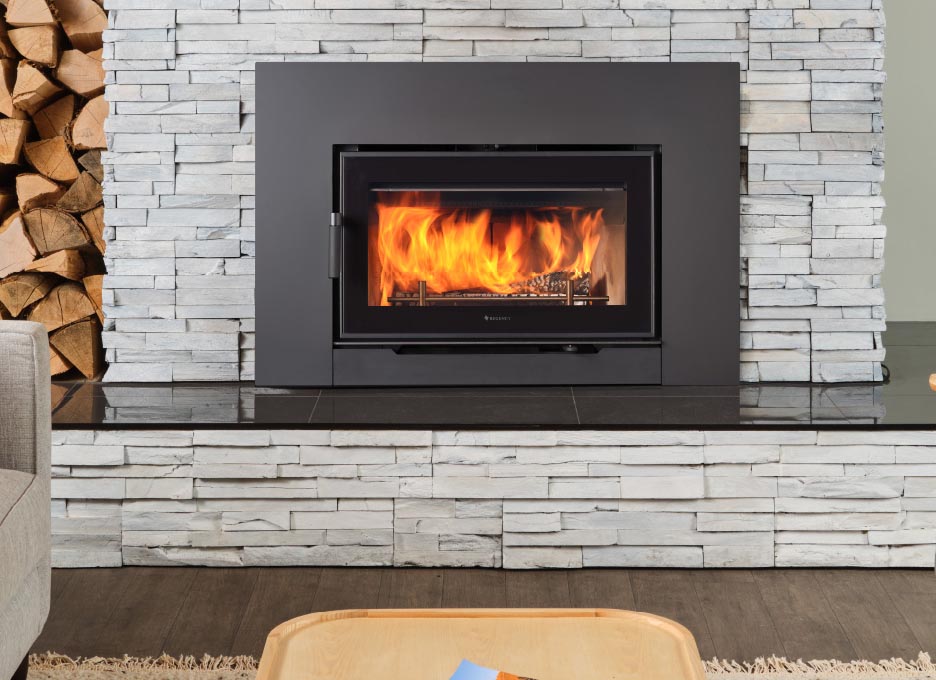
A fireplace insert is essentially a high-efficiency heating appliance designed to fit inside an existing fireplace opening.
Instead of allowing much of the heat from a wood fire to escape through the chimney, an insert is designed to capture and distribute more of that heat into the room.
A wood-burning fireplace insert typically includes:
- An enclosed firebox
- Glass doors
- Air controls
- A chimney liner or venting connection
- Optional or integrated blower systems
The result is a fireplace that maintains the appearance and location of your existing hearth while functioning more like a modern wood-burning heating appliance.
What Is a Wood Stove?
A wood stove is a freestanding heating appliance designed specifically for burning wood efficiently.
Unlike an insert, which sits inside an existing fireplace, a wood stove stands independently in the room.
Depending on the home and installation, a stove may vent through:
- An existing compatible chimney
- A properly installed chimney liner
- A new manufactured chimney system
Modern wood stoves are a far cry from the old cast-iron boxes many people remember.
Today’s systems are available in a wide variety of styles and can provide impressive heating performance while becoming a beautiful focal point in the home.
Which Produces More Heat?
Both options can provide substantially more usable heat than a traditional open fireplace.
A traditional fireplace may look beautiful, but much of the heat produced by the fire can travel directly up the chimney.
Modern inserts and wood stoves are designed to capture more of that energy and transfer it into your living space.
The actual amount of heat produced depends on several factors, including:
- Appliance size
- Home square footage
- Floor plan
- Insulation
- Ceiling height
- Wood quality
- Installation
- Manufacturer specifications
A properly sized appliance matters.
Bigger isn’t automatically better.
An oversized stove or insert can make a room uncomfortably hot and may encourage operating practices that reduce performance. An undersized appliance may struggle to provide the amount of heat you’re expecting.
Professional sizing is an important part of the installation process.
Which Is More Efficient: A Fireplace Insert or Wood Stove?
Modern wood-burning inserts and freestanding wood stoves can both be highly efficient when properly selected, installed, maintained, and operated.
The more important comparison is often between either of these systems and a traditional open fireplace.
An insert can transform an existing fireplace from something used primarily for atmosphere into a much more effective heat source.
A wood stove is designed from the beginning as a heating appliance and can also provide excellent performance.
When comparing individual products, look at the manufacturer’s rated efficiency rather than assuming that every stove will outperform every insert.
Fireplace Inserts Are Great for Existing Fireplaces
One of the biggest advantages of a fireplace insert is that it allows you to make use of a fireplace you already have.
Many older Wichita homes have beautiful masonry fireplaces that homeowners don’t want to remove.
An insert allows you to retain that architectural feature while upgrading its performance.
This can be particularly attractive if you:
- Love the location of your existing fireplace
- Want to preserve your hearth and mantel
- Don’t want a freestanding appliance taking up additional floor space
- Want a cleaner, more updated fireplace appearance
- Want more heat from an existing fireplace
For many homeowners, an insert provides a nice balance between traditional fireplace aesthetics and modern heating performance.
Wood Stoves Give You More Placement Options
If you don’t have an existing fireplace—or the fireplace isn’t suitable for an insert—a freestanding wood stove may be the better option.
A properly planned wood stove installation in Wichita can sometimes give homeowners greater flexibility in deciding where the heat source should be located.
That can be especially helpful in:
- Large living rooms
- Open floor plans
- Workshops
- Additions
- Cabins
- Homes without existing fireplaces
However, placement isn’t simply an aesthetic decision.
Wood stoves have specific clearance, floor protection, chimney, and venting requirements that must be considered before installation.
Which Option Looks Better?
This really comes down to personal preference.
Fireplace Inserts
Inserts tend to provide a clean, integrated appearance.
They’re a great fit for homeowners who want:
- A traditional hearth
- A built-in appearance
- Less equipment extending into the room
- A modernized version of their existing fireplace
An insert can also be incorporated into a larger fireplace renovation with updated stone, brick, hearth materials, and mantels.
Wood Stoves
Freestanding stoves create a completely different aesthetic.
Depending on the model, they can feel:
- Rustic
- Traditional
- Farmhouse
- Modern
- Contemporary
For some homeowners, the stove itself becomes the centerpiece of the room.
There isn’t a wrong answer. It’s about what complements your home.
Can I Put an Insert Into Any Existing Fireplace?
Not necessarily.
Before installing a fireplace insert, the existing fireplace and chimney need to be evaluated.
A professional may need to consider:
- Fireplace opening dimensions
- Chimney condition
- Flue size
- Existing liner condition
- Clearance requirements
- Insert specifications
- Venting requirements
The fact that an insert physically fits inside the fireplace doesn’t automatically mean it can be safely installed there.
That’s why an inspection should be one of the first steps when considering a fireplace insert installation in Wichita.
Does a Fireplace Insert Need a Chimney Liner?
The venting system is a critical part of any wood-burning installation.
Depending on the appliance and existing chimney, an appropriate liner may be required to connect the insert to the chimney system and safely carry combustion gases outside.
The liner needs to be correctly sized and compatible with the appliance.
This isn’t an area where homeowners should improvise.
The appliance manufacturer’s requirements and applicable installation standards should determine how the system is vented.
What If My Existing Chimney Is Damaged?
Finding chimney damage doesn’t necessarily mean you have to abandon the idea of an insert.
Depending on the issue, the chimney may be repairable.
Common problems include:
- Cracked flue tiles
- Deteriorated mortar
- Water damage
- Crown damage
- Improper previous repairs
- Masonry deterioration
A professional chimney inspection can identify these problems and determine what needs to be corrected before installation.
In some situations, installing an insert becomes part of a larger fireplace restoration project.
Do Wood Stoves Need a Chimney?
Yes. A wood stove needs a properly designed venting system.
That may involve connecting to an appropriate existing chimney or installing a new chimney system designed for the appliance.
A professional wood stove installer in Wichita, KS should evaluate the proposed location, venting path, clearances, hearth protection, and manufacturer requirements before installation begins.
Proper installation is essential because a wood stove produces substantial heat.
Which Is Better for Heating During a Kansas Winter?
Kansas winters can range from relatively mild days to bitter cold, strong winds, and temperatures well below freezing.
Both wood stoves and fireplace inserts can provide valuable supplemental heat during cold weather.
Which one is best depends heavily on your home.
For example, a centrally located wood stove in an open floor plan may distribute heat differently than an insert installed in a fireplace on an exterior wall.
Factors such as:
- Home size
- Fireplace location
- Room configuration
- Insulation
- Air circulation
can all influence performance.
Rather than asking which appliance produces “the most heat,” it’s often better to ask:
Which appliance will heat my particular home most effectively?
Can a Wood Stove or Insert Heat My Entire House?
Sometimes—but homeowners should be careful with this expectation.
A properly sized wood-burning appliance can provide significant heat, but how effectively that warmth moves throughout the house depends on the home’s design.
An open-concept ranch may distribute heat very differently from a two-story home with closed rooms and narrow hallways.
Wood stoves and inserts are excellent supplemental heating options, but whether one can serve as a primary heat source should be evaluated on a home-by-home basis.
What About Installation Cost?
The price of either system varies considerably.
Factors affecting the cost of a fireplace insert include:
- Insert model
- Existing fireplace condition
- Chimney liner requirements
- Chimney repairs
- Surround materials
- Installation complexity
Factors affecting wood stove installation costs include:
- Stove model
- Chimney requirements
- Stove location
- Hearth construction
- Floor and wall protection
- Venting path
- Installation complexity
This is why generic online prices can be misleading.
Two homeowners purchasing the exact same stove could have very different installation costs based on their homes.
Which Requires More Maintenance?
Both systems require routine maintenance.
If you’re burning wood, you’re producing combustion byproducts—including creosote.
Both wood-burning inserts and wood stoves require:
- Chimney inspections
- Chimney cleaning when needed
- Creosote monitoring
- Appliance maintenance
- Gasket inspection
- Proper ash removal
Neither should be considered maintenance-free.
Regular professional inspections help ensure the entire system—from the appliance to the top of the chimney—is operating as intended.
The Wood You Burn Matters Too
Even the best wood stove or fireplace insert won’t perform properly if you’re burning poor-quality fuel.
For cleaner, more efficient fires, burn properly seasoned wood with an appropriate moisture content.
Wet or unseasoned wood can:
- Produce more smoke
- Create more creosote
- Make fires difficult to maintain
- Reduce heat output
- Cause dirty glass
Good firewood and proper burning practices are important regardless of which appliance you choose.
What About Fireplace Restoration?
Sometimes homeowners aren’t simply choosing an appliance.
They’re redesigning the entire fireplace.
An old brick fireplace can often be transformed with:
- A new fireplace insert
- Updated stone or brick
- A redesigned hearth
- A new mantel
- Masonry restoration
- Modern finishes
This can turn an outdated fireplace into one of the most beautiful features in the home while also improving its functionality.
If you already have an older fireplace you don’t love, don’t assume demolition is your only option.
A professional fireplace restoration may give you an entirely new look.
Fireplace Insert vs. Wood Stove: Which Should You Choose?
Here’s the simplest way to think about it.
A fireplace insert may be right for you if:
- You already have an existing fireplace
- You want to maintain a built-in appearance
- You want more usable heat from your fireplace
- You don’t want to sacrifice additional floor space
- You’re considering remodeling your existing fireplace
A wood stove may be right for you if:
- You don’t have an existing fireplace
- You want a freestanding heating appliance
- You have an appropriate location for installation
- You like the appearance of a freestanding stove
- You want flexibility when designing a new heating system
But the final decision should be based on your home and the specific appliances you’re considering.
Start With a Professional Evaluation
If you’re seriously considering either option, don’t begin by purchasing an appliance.
Begin by evaluating your home.
A professional can look at:
- Your existing chimney
- Fireplace dimensions
- Home layout
- Available installation locations
- Venting requirements
- Heating goals
From there, you can narrow down the options that actually work for your home.
This can help prevent one of the most frustrating mistakes homeowners make: buying an appliance first and discovering later that installation will be difficult, expensive, or impossible in the location they wanted.
Fireplace Insert and Wood Stove Installation in Wichita, KS
At Flue Bird Chimney, wood-burning systems are a major part of what we do.
We’ve served Wichita and surrounding Kansas communities since 1994, helping homeowners install, maintain, repair, and upgrade fireplaces, inserts, wood stoves, and chimney systems.
Our services include:
- Fireplace insert installation
- Wood stove installation
- Chimney installation
- Chimney inspections
- Level 2 camera inspections
- Chimney cleaning
- Fireplace restoration
- Chimney liners
- Masonry and stone work
- Chimney repair and rebuilding
Whether you’re trying to get more heat from an existing fireplace or considering adding a new wood stove to your home, we’ll help you understand your options and choose a solution that makes sense for your space.
Call Flue Bird Chimney today to schedule your free, no-obligation quote. We’ll evaluate your home, answer your questions, and help you determine whether a fireplace insert or wood stove is the right choice for your next Kansas winter.
0 Comments